Showing posts with label culture. Show all posts

Saturday, February 16, 2008

West Sumatra


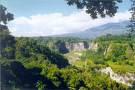
West sumatra is one of the most beautiful areas of Indonesia. It is mountainous and divided by three valleys. There are lovely lakes and spectacular volcanoes. But Minangkabau land is very special and has the most friednly population group of Indonesia. They love to talk with visitors and will tell us about their unique society. If a visitor tries to understand the culture and Minang traditions he will soon feel himself a member of the clan. He will be invited as a guest to their homes - a unique way to become acquainted with real Indonesia life. Most of our hosts and hostesses are English teachers so language will not be much of a problem. They will show us the community and explain their customs.


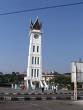
The land of the Minangkabau, West Sumatrahas a distinct culture, which distinguishes it from the rest of the isaland. A land of scenic beauty with blue green lakes and mountains, West Sumatra's Center of Culture and tourism is Bukittinggi in the highlands, north of the provincial capital of Padang. Most prominent in the landscape is the horn-shaped roofs of the houses nestled in the coconut groves. The name Minangkabau means triumphant buffalo. It leads a community and family life based on a matrilineal system, which clusters around mosques and the taraditional houses. As it is the women who have the propertise, the men are known for their wanderlust and entrepreneur ship. Traveling is Considered a mark of success and therefore many6 of them are found "merantau" (emigrated) to other parts of country. This is proof that many Minang or Padang restaurant, serve very spicy food, found in all major towns in the nation. The people are hospitable and eloquent in a poetic style of speech and ceremonies. Festivals are colorful occasions.

West Sumatra has a coastline where the capital is situated. The hinterland is a range of high mountains, which dip into picturesque valley and lakes. Pagaruyung, (the art centers for silver, hand-weaving, embroidery and woodcarving).
Geographically
West Sumatra province has about 49,778 sq Km widht, which is located between Oo 54' North Latitude and 3o 3O South Latitude and between 980 36' and 1O10 53'. The boundaries of this regency is:

Nort Side: Riau Province
South Side: Indian Ocean
West Side: North Sumatra Province
East Side: Jambi and Bengkulu Province

Wide Area

West Sumatra Province has 42,297. 30-Km2 areas. The West Sumatra coastline faces the Indian Ocean and stretches 375 Km from North Sumatra province in the northwest to Bengkulu in the southeast. West Sumatra lakes include: Maninjau (99.5 Km2), Singkarak (130.1 Km2), Diatas (31.5 Km2), Dibawah (14.0 Km2), Talang (5.0 Km2). West Sumatra rivers include Kuranji, Anai, Ombilin, Suliki, Arau. The mountains & volcanoes of West Sumatra are include: Marapi (2,891 m), Sago (2,271 m), Singgalang (2,877 m), Talakmau (2,91 m) Talang (2,572 m), Tandikat (2,438 m).



Climate

The temperature of west Sumatra province has ranges between 22o C and 32o C, and the rainfall is 2,298 mm per year.

Administratively

West Sumatra Province is divided among 8 regencies and 6 municipals with Padang as its capital city.

Demography

The people of this province have a strong traditional leaving their hometown to make their way of life. Indeed, West Sumatra communities ( Minang ) are easily found in each province of Indonesia. In 1994, the total population reached 4,265,900 people with its density amounted to 101 people per Km2. In the 1990-1994 periode, the people grew at a rate 1.6% per year or in the lower level that of the population national growth amounted to 2.144% per year.

Friday, February 15, 2008

Tana Toraja, South Sulawesi-Land of The Heavenly Kings


The road from Makassar or Ujunga Pandang to Toraja runs along the coast for about 130 Km's and then hits the mountains. After the entreance to Tana Toraja you enter a majestic landscape with giant gray, granites and stones and blue mountains at a disatance after passing the market village of Mebali. They form a sharp contrast with the lively green of the fertile, rain-fed terraces and the rusty read of the tropical laterite soil. This is Tana Toraja, one of the most splendid areas in Indonesia.

Tana Toraja has a specific and unique funeral ceremony which is called Rambu Solo. In Tana Toraja, dead body is not buried, but it is put in Tongkonan for several times, even can be more than ten years until the family have enough money to held the ceremony. After ceremony, the dead body is brought to the cave or to the wall of the mountain. The skulls show us that the dead body is not buried but just put on stone or ground, or put in the hole. The funeral festival season begins when the last rice has been harvested, usually in late June or July, and laste through to September.


  • By Air
Directly from Hasanuddin airport, Makassar or Ujung Pandang, proceed to TANA TORAJA through the airport of Rantetayo, near Makle, 24 KM south of Rantepao and there is a bus service to town.
  • By Land
Buses to RAntepao from Ujung Pandang leave daily from Ujung Pandang. The journey takes 8 hours and includes a meal stop. Tickets should be bought in town but coaches actually leave from Panaikan bus terminal, 20 minutes out of town by bemo. Coaches typically leave in the morning ( 7 am ) , noon (1 pm ) and at night ( 7 pm ). Several companies in Rantepao run buses back to Ujung Pandang with the depature time and prices. The number o f buses each day depends on the number of passengers.
Tourist who wants to stay in the heart of the city has many choices since there is lot of hotels available. Or if you had an adventurous soul, yaou can sleep in vilages on the way.


Bemo is the best way to get to know the locals, besides cahrtered vehicles (minibuses and Jeeps) with or without driver. While you are in the village you can take a walk to move around.

  • Exploring the market; you should not be missed going to the traditional market. Here you can get the topof Toraja coffee beans [like Robusta and Arabica]. And several local veggies, fruits Tamarella or Terong Belanda and gold fish [ikan mas].
  • Visit Batu Tumonga Plateu; It means stone that facing to the sky. From here can be seen many volcanic stones comes up in between padi fields. And, several giant stones became cave graveyard. The views is pretty awesome. The huge of Tana Toraja [Toraja land] looks so lush and greenery. Like a patchwork in gradtion hue of green color.
  • Palawa is an excellent village to visit a Tongkonan, or a burial place swarming with celebrations and festival.
  • Take a side trif froom Rantepao to Kete, a tarditional village with excellent handicraft shops. Behind the village on a hillside is a grave site with lifesize statues guarding over old coffins.

Most of times, you can't eat at thees locations; however more warung and restaurants appear along the road. You can also bring yuor own foods and drinks.

There is a souvenirs shop where you can buy everything specific from Tana Toraja. There are clothes, bags, wallets and other handicrafts.

  • Visitor are expected to adhere to local dress customs and to bring a token present, such s cigarettes or coffee whenever entered Tonhkonan.
  • As roads are not always paved, it is necessary to use a jeep or walk, even when the weather is good (between May and October).
  • Beware with your head whenever going inside to Tongkonan. The Torajan traditional house.
  • Enrekang, Makale and Toraja Higland are surrounded by astonishing volcanic rocky cliffs. Do not miss it, just stop and take picture for awhile and will not regret.

Thursday, February 14, 2008

West Java


Of the 17,000 islands that make up the archipelago of the Republic of Indonesia, Java has historicall been considered the heartland, Where Java has led-culturally, economicall and politically down through the centuries, other regions have followed. On java, still the most densely populated isaland of Indonesia, there are five Provinces. West Java is the largest, with the greatest population, and some would claim, with the most pride.

West Java Province is located at part of western Java Island. The enchanting of Sunda land stretches from Sunda Strait in the west to the borders of Central Java in the east. The local's people know West Java Province as the Land of Sunda. The region is primarily mountainous, with rich green valleys hugging lofty volcanic peaks, many of which surround the capital of West Java province. The history of West Java is a story of trade, spices, and the rise and fall of powerful kingdoms. In the late 1500's the region was ruled from migthy Cirebon, which still survives as a sultanate today, although a shadow of its former glory. West Java was of the first contact points in Indonesia for Indian traders and their cultural influences, and it was here that the Dutch and British first set foot in the archipelago.


This province has it own unique culture and language, both called Sundanese that is also used to call its people. The ancient kingdoms of Tarumanegara, Pajajaran, Banten and Cirebon would make interesting studies for the student of archaeology. Cirebon is located on the border between West and Central Java, having a mixed culture originating from the ancient Cirebon and Banten kingdoms, resulting in similar customs and dialects of the two people, although Banten is located at the extreme western part of the province.


West Java province its self, is formed based on the Constitution number 11/1950 on the establishment of West Java. With the issueance of Constitution number 23/2000 on Banten Province, West Java Governor Assisting Territory I Bnaten was inaugurated as Banten Province with its territories comprising Serang Regency, Pandegelang Regency, Lebak Regency, Tangerang Regency and Mayoralty, and Cilegon Mayoralty. After the change, at present West JAva consist of 18 regencies, nine mayoralties, 584 districts, 5,201 villages and 609 sub districts.

The capital city of West Java province is Bandung city. Bandung is situated 180 Km southeast of Jakarta. The city gamed fame in 1955 as the venue for the first Afro-Asian Conference, which brought together the leaders of 29 Asian, and African nations wuth the aim to promote economic and culture relations and take a coomon stand againts coloialism.

The road from Jakarta to BAndung passes through a beautiful panorama of mountains, paddy fields and small holiday resort. An expressway connects the crowded capital city with Bogor and the mountain areas, and onward to Bandung. It has number of sea resort on its western and southern coast, which have modern hotels and are popular during the weekends.

Bali


Bali island, the perfect holiday destination for all ages offers something for everyone. Bali offers not just various customs but also various "adrenalin pump" parks. Many exciting amusements are available in Bali, with something new opening all the time. The number of offshore and inland attraction are on the rise because many tourist want them. this tropical paradies has unique blend of modern tourist facilities combined with wonderful shopping and rich past and heritage. After ehite water rafting. The more adventure sort of amusement has now become an alternative sport for tourist. Meanwhile white water rafting is still a popular activity with trips on Ayung, Telaga Waja, Unda Rivers, etc. The tourists can refresh their mind by watching beautiful scenery along the route. Those are not enough, some of the best surfing beaches in the world can be found on the western side of the island whilst conversely the eastern side a wonderful heaven for families, with beautiful white sand beaches and gentle seas.


Bali is small island, just 140 Km by 180 Km and lies between Java, the most higly populated and influential of all isaland. and Lombok, one of the quieter and moderately slower paced islands. Like many isalnds, Bali has developed a world of its own. It not only captures what is special about Indonesia but also has uniqueness of its own.


The culture of Bali is unique. People say that the Balinese people have reached self-content. The Balinese people are proud of having preserved their uniqeu Hindu culture againts the advance of Islam, the domainant religion throughout Indonesia. This is still reflected in days to day life and can be seen in the numerous ceremonies, Balinese festivals and magnificent temples and palaces. The Balinese are skilled artisans, particularly in woodcarving and in fashioning objects of tortoiseshell and of gold, silver and others metals. The Balinese are noted for their traditionl dance, the distinctive music of the gamelan and for their skills in weaving cloth of gold and silver threads, Songket, as well as for embroidering silk and cotton clothing. Stone and woodcravings, traditional and modern paintings and intricately designed jewelry in gold and silver are readily available in shop and galleries throughout the island.


As for recreation, ther is no shortage of options. Nature walks, horseback riding, diving, surfing-even bungy jumping and white water rafting-await the adventurous here.
